

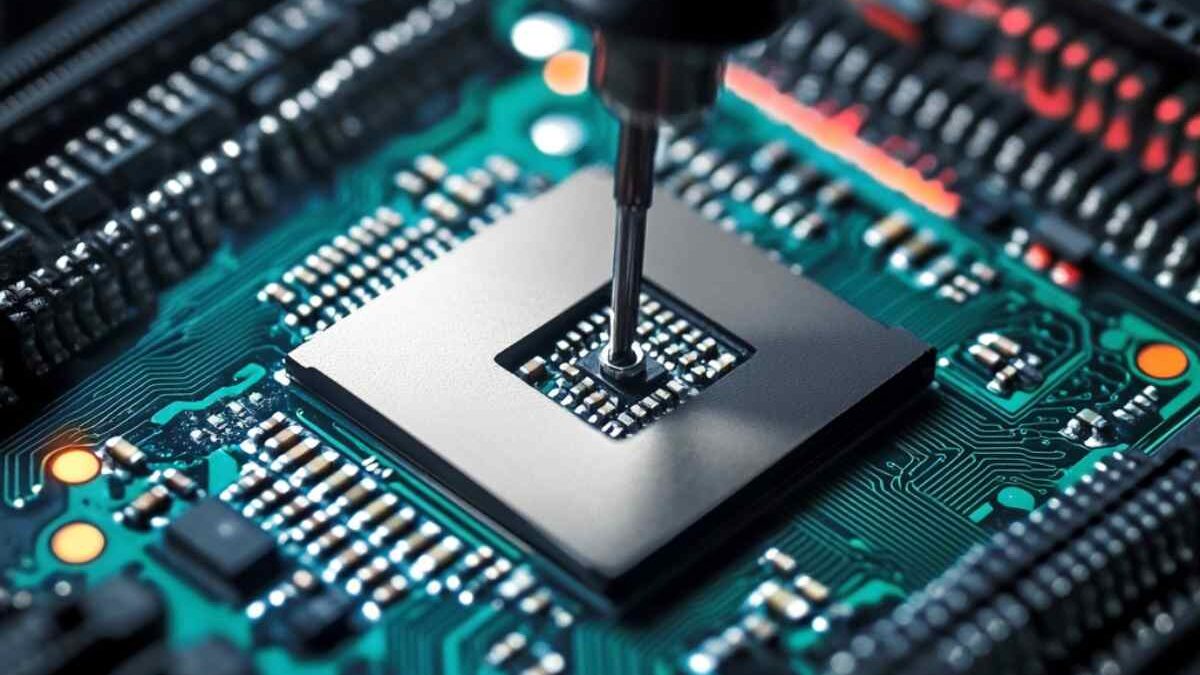


| Definition: What is flashing tech?
Flashing tech is the process of rewriting firmware — the low-level software stored permanently on a chip inside your device that controls how its hardware behaves at the most basic level. Unlike app updates or OS reinstalls, flashing modifies the layer below the operating system. It cannot be undone through normal software tools, and done incorrectly it can permanently disable hardware with no recovery path. |
A software update and a firmware flash are practically indistinguishable from the outside as simple as clicking the button for software updates and waiting for reboot or so it seems. The difference is what occurs when the process does not go as planned.
A bad software update is annoying. A bad firmware flash can permanently destroy hardware with no recovery path. That’s not an exaggeration — it’s the technical reality of writing directly to a device’s core memory chip.
This document outlines what flashing tech actually is, who it’s for, when it is appropriate, and how industry experts sidestep the pitfalls that currently lead to the bricking of devices across the spectrum.
Table of Contents
Summary
• This is a breakdown of exactly what flashing tech is, who it’s aimed at, when it is suitable and how forward thinking individuals in the technological world avoid the deterring downfalls that are currently resulting in the bricking of a multitude of devices across the spectrum.
• It is system surgery, not a routine update. Done wrong, it can permanently disable a device.
• Most flashing failures happen because flashing was never necessary in the first place.
• Real includes: security patches, proprietary fixes, or other critical updates or custom roms not going after the version number.
• Always check where the firmware came from, back up all data and plan a way to roll back before flashing anything.
What Exactly Is Flashing Tech?
Firmware programs that are located on non-volatile memory chips that programs how hardware works, down on the lowest levels. We can imagine all hardware having three “software” levels:
- Apps — what you use day to day
- Operating system — manages resources, runs apps, handles user interaction
- Firmware — talks directly to the hardware, controls boot behaviour, sensors, and core functions
Directly writes a new code to the non-volatile memory of the chip non-volatile memory is a type of computer memory that will keep hold of the information even when it has no power. You can see how this is more like computer-surgery than general maintenance. If you click stop or the firmware becomes corrupt the device is left with no alternative.
Common device types where flashing is used:
- Phones of any kind can be unlocked, by installing a custom rom, unlocking it for other carriers, or downgrading the OS to a vulnerable version.
- Routers and network hardware – security updates, performance patches, use of OpenWRT.
- IoT devices and embedded systems — bug fixes, new protocol support
- Automotive ECUs (engine control units) — tuning, compliance updates, recall fixes
- Industrial controllers and medical devices — regulatory-approved firmware corrections
Soft Brick vs. Hard Brick: What Can Go Wrong
The term “bricking” is used throughout flashing documentation without always being explained. There are two types, and the difference matters:
| Soft brick vs. hard brick
Soft brick: The device powers on but gets stuck — usually on a boot screen or in recovery mode. It is not fully functional, but recovery is often possible via recovery mode, ADB, or a clean reflash. Hard brick: The device does not respond at all — no screen, no boot, no USB detection. This is rare but is one of the few truly unrecoverable failure modes, especially on budget hardware without a secondary recovery partition. |
Hard bricks most commonly occur due to: power loss mid-write, flashing firmware built for a different hardware variant, or writing to a protected partition incorrectly.
Who Is Flashing Tech For?
Flashing is not for casual users who want a speed boost. It is a legitimate technical process used by specific professional and enthusiast audiences:
IT and security teams responsible for large numbers of IoT devices and require immediate firmware upgrades following security disclosures particularly when OTA infrastructure isn‘t available or practical.
Developers and hardware engineers who need to test custom builds, troubleshoot firmware behaviour, record a prototype application onto evaluation units.
Power users and tech enthusiasts who try to unlock functionalities that hardware manufacturers have purposely disabled, install open source firmware (for example: OpenWRT on phones and routers) or maintain older equipment.
Automotive and industrial technicians applying manufacturer-issued firmware corrections to control units — a common practice in both scheduled maintenance and recall responses.
If you received a notification saying “update available,” you are not flashing your device. You are running a standard OTA (over-the-air) update, which is a fundamentally different and much safer process that runs with manufacturer guardrails in place.
Flashing Tools by Device Type
Selecting the right tool is just as cruicial as selecting the right firmware. Using the wrong tool for your device chipset will not simply fail — it can cause permanent damage. Below are the most widely used and trusted tools across device categories:
| Device / Brand | Recommended tool | Best for | Where to download | Skill level |
| Samsung Galaxy | Odin | Stock firmware, kernel, recovery flash | Official Samsung site / XDA | Beginner |
| MediaTek devices (Xiaomi, Oppo, others) | SP Flash Tool | Firmware, custom recovery, unbrick | Spreadtrum official site | Intermediate |
| Xiaomi / Redmi | Mi Flash Tool | Stock ROM, boot loop repair, MIUI fix | Xiaomi official site | Beginner |
| Qualcomm devices (most brands) | QFIL / QPST | Deep-level flashing via EDL mode | Qualcomm developer portal | Advanced |
| Oppo / Realme / OnePlus | MSM Download Tool | Unbrick completely dead devices | Device-specific community mirrors | Intermediate |
| General Android | ADB / Fastboot (Android SDK Platform Tools) | Custom ROMs, bootloader unlock | Google developer site (official) | Intermediate |
| Routers (all brands) | TFTP / Manufacturer web UI | Firmware restore after failed flash | Router manufacturer site | Intermediate |
Important : Firmware is hardware dependent. The same product being sold in different countries could potentially have a different chipsets. A firmware file built for one variant can permanently disable another. Always verify your exact model number AND hardware revision — not just the product name — before downloading any firmware file.
When Does Flashing Tech Actually Make Sense?
The honest answer: less often than most tutorials suggest. Many bricked devices failed not because flashing went wrong — but because flashing was never necessary in the first place.
Security vulnerabilities with no OTA fix available If device no longer receives manufacturer upgrades but a known exploit exists for it, then flashing to patched community firmware will likely be your only practical solution. patched community firmware is often the only practical remedy.
Custom functionality that stock firmware does not support. OpenWRT, LineageOS, and similar open-source projects give devices capabilities the manufacturer never intended — better VPN support, extended hardware compatibility, enhanced privacy controls.
Downgrading after a bad update. Manufacturers occasionally push OTA updates that introduce regressions or remove features. Flashing an older, stable firmware version is sometimes the only route back.
Extended device life. Community firmware allows for can extend the lifespan of a device far beyond when the manufacturers drop support.
When You Should NOT Flash a Device
- Do not flash just to get the latest version. The best device & already unrooted if possible updates, flashing is purely dangerous. Reduce risk with no reward.
- Never flash if you do not have a verified source for your firmware. Unverified mirrors without checksums are an easy way to malware or a broken flash.
- Do not flash under time pressure. A loss of power or a reboot mid-process can lead to permanent damage.
- Do not flash devices with safety critical functions without the proper authorisation and testing. This applies to motor-cars, medical, and industrial
- Do not flash without a verified source for the firmware. A mirror without a checksum is an open invitation to malware or a dodgy
Before You Flash: 6-Step Pre-Flash Checklist
Professionals will not flashing until this checklist is all checked. If some step can not be done, should cancel out and sorted it before.
- Check the source of the firmware and check the checksum (MD5 or SHA-256)
Download only from the official manufacturer site or a well audited community source such as XDA or OpenWRT or LineageOS official builds. Check the checksum and and then continue.
- Back up all Data, configurations, and settings
Flashing usually erases existing data.On phones, use an encrypted backup. On routers, export your config file. On IoT devices, document all settings manually if necessary.
- Verify your exact hardware model and revision number
The model code should be checked on the device and not on the box. Different chipsets for regional variations of the same product may need different firmware files.
- Charge the device to at least 80% battery
Power loss mid-write. This is one of the few truly unrecoverable failure modes. Keep your system on a UPS or other reliable source if not portable.
- Disable auto-updates and close background applications on your computer
A surprise reboot after a Windows update or an antivirus scan hitting a USB transfer just as you were mid-flash will corrupt the firmware write.
- Confirm a recovery or rollback path exists before starting
Some devices — particularly budget IoT hardware — have no recovery partition. Ensure your device has one of the following: recovery mode, a fallback partition or an external recovery. Otherwise, evaluate the risk again.
Should I Flash My Device? A Quick Decision Guide
Work through these five questions in order. Stop at the first “no” and resolve that issue before continuing.
| Quick decision guide
1. Is there a specific, documented problem or security vulnerability I am trying to resolve? → No: Do not flash. Flashing without a clear reason creates risk with no benefit. 2. Is there an official OTA or manufacturer-supported fix available? → Yes: Use the official route instead. Flashing is unnecessary. 3. Is the firmware file from a verified, checksummed source? → No: Stop. Never use unverified firmware. 4. Is all the data fully backed up, and is there a known rollback or recovery path? → No: Get them first. Do not proceed without both. 5. Is the device charged above 80% and on stable power? → No: Charge it first. If you answered YES to questions 1, 3, 4 and 5, and NO to question 2, you are now ready to move ahead cautiously. |
Common Mistakes (and How Professionals Avoid Them)
1. Using unverified firmware
Always get whatever you download from official manufacturing site or from well known heavily audited community source. Hash the file (or MD5 or SHA-256) and make sure that the checksum is not changed. If the checksum doesn‘t match the expected value then the file is corrupted or modified. Discard it.
2. Skipping the backup
Flashing usually erase all the data. Save your setting, configuration and user data, before flashing when it‘s possible. On routers, export your config file. On phones, use an encrypted backup. On IoT devices, photograph or document all configuration screens.
3. No rollback plan
Before flashing, confirm whether the device supports a recovery mode or a fallback partition. Some devices — particularly budget IoT hardware — do not, and a failed flash means the unit is gone. Professionals always confirm the recovery path before starting.
4. Ignoring battery level
On portable devices, never flash below 80% battery. A power interruption mid-write is one of the few genuinely unrecoverable failure modes. On devices powered via mains, ensure the power source is stable throughout the process.
5. Using the wrong firmware version
Firmware is hardware-specific. A product purchased in different country or region may have different chipset, and a certain firmware file then can brick another hardware version permanently. Always check the model number and hardware revision before downloading.
6. Flashing under time pressure
Firmware writes can take several minutes. An impatient restart, an accidental cable disconnection, or an unexpected OS update on your computer mid-process is one of the most common causes of permanent damage. Never begin a flash if you may be interrupted.
Flashing Tech Across Industries
The risk profile of flashing varies significantly by sector. The table below outlines the key considerations for each major industry:
| Industry | Common use case | Recommended approach | Key risk | Regulatory consideration | Difficulty |
| Consumer electronics | Custom ROMs, carrier unlock, OS downgrade | Official unlock programs where available | Voided warranty, hard brick | None (consumer responsibility) | 2 / 5 |
| Networking / IT | Security patches, OpenWRT, performance tuning | Verify checksum, back up config first | Config loss, device lockout | Data protection compliance | 3 / 5 |
| Automotive | ECU tuning, recall fixes, compliance updates | Manufacturer-authorised tools only | Safety, liability, warranty | UNECE / NHTSA regulations | 4 / 5 |
| Industrial IoT | Protocol updates, bug fixes, feature additions | Staged rollout with confirmed rollback | Downtime, production loss | IEC 62443 / industry standards | 4 / 5 |
| Healthcare devices | Regulatory-approved updates only | Strict change control required | Patient safety, liability | FDA / MDR compliance required | 5 / 5 |
| Military / Aerospace | Security patches, mission-critical updates | Authorised channels with full audit trail | Mission compromise | Strict clearance and testing protocols | 5 / 5 |
Flashing Tech and Security: The Double-Edged Reality
Flashing firmware is, at the same time, a valuable security tool and a huge attack vector. Both need to be understood by anyone operating device fleets or advising on hardware security.
The defensive side
Controlled flashing allows security teams to rapid patch security holes across huge fleets of devices, especially in IoT scenarios where OTA infrastructures are limited or unavailable. For a critical bug, where no updates are being supplied by the manufacturer, flashing community patched firmware could be the last source of mitigation.
The offensive side
Malware at the firmware level has the greatest ability because it functions below the operating system. An infection would be unaffected by a system restore, not detected by antivirus software, and would not be affected by a software reinstall. Real-world firmware threat classes include:
- UEFI bootkits malware in UEFI firmware able to survive OS reinstallation ((examples of bootkits including LoJax, MoonBounce, CosmicStrand and BlackLotus.))
- Malicious firmware injected via supply chain attacks before devices reach end users
- Firmware implants used in targeted attacks against specific hardware platforms
| Critical fact
Factory reset does not get rid of malware residing in firmware. Firmware malware is run below the OS and remains unaffected by factory resets, OS reinstalls and complete disk wipes. The only remediation is a verified, clean firmware reflash — which is why source verification is not optional. |
The NIST Platform Firmware Resiliency Guidelines (SP 800-193) and CISA firmware security advisories provide authoritative guidance for organisations managing device fleets at scale.
Does Flashing Void Your Warranty?
Usually yes, particularly when unofficial tools or third-party firmware are used. Most manufacturers treat unauthorised firmware modifications as grounds to void hardware warranties entirely.
Some Android devices offer official unlocking programmes. Google Pixel devices, for example, support a documented bootloader unlock process. But even with official support, warranty terms typically change once the bootloader is unlocked.
If a device is still under warranty and functioning normally, flashing for non-critical reasons is rarely worth the coverage you would give up.
Frequently Asked Questions
What is flashing tech in simple terms?
Flashing tech means rewriting the firmware on a device — the core software stored on a chip that controls how hardware operates at its most basic level. It sits below the operating system and cannot be changed through normal software updates.
Is flashing tech safe?
It can be safe when it is justified, planned, and executed with verified firmware and a confirmed rollback option. Most risks come from flashing when it is not necessary, or from proceeding without proper preparation.
Can flashing permanently damage a device?
Yes. Incorrect firmware, mismatched hardware versions, or power loss during the write process can permanently brick a device. Hard bricks are rare but genuinely unrecoverable on many consumer devices.
Is flashing the same as a software update?
No. Standard software updates modify apps or the OS while leaving firmware intact. Flashing rewrites low-level firmware that controls hardware behaviour — it is a fundamentally deeper and riskier operation.
Can a factory reset remove firmware malware?
No. Firmware-level malware operates below the OS and persists through factory resets, OS reinstalls, and full storage wipes. The only remediation is a verified, clean firmware reflash.
How do I know if my device needs flashing?
The most common legitimate reasons are: a known security vulnerability with no OTA patch available, the device is end-of-life and community firmware provides the only ongoing support, or a bad official update needs to be reversed. If none of these apply, your device almost certainly does not need flashing.
Does flashing a device void the warranty?
In most cases yes. Unofficial firmware or tools typically void manufacturer warranties. Some manufacturers support official unlock programmes, but warranty terms usually change regardless.
How do professionals approach flashing?
They flash only when there is a clear, justified reason. They verify firmware integrity via checksum, back up all configurations, confirm a recovery path exists, and ensure the device is on stable power before starting. Speed is never prioritised over verification.
Final Conclusion
Flashing tech is one of the most consequential actions you can take on a device — and one of the most misunderstood.
When it is the right call, it can extend a device’s useful life, close a critical security gap, or unlock functionality that stock firmware will never provide. When it is done carelessly, it turns functional hardware into an expensive paperweight with no recovery path.
Flashing tech is not a routine upgrade. It is a high-impact system action that directly affects device stability, security, and long-term usability.
Before you flash anything, ask yourself:
- Is there a verified, checksummed firmware source?
- Do I have a full backup and a confirmed rollback or recovery option?
- Is there a real, specific reason to do this — or am I chasing a version number?
If all three answers are yes, proceed carefully. If any answer is no, wait until they are.