


Some accident injury cases are relatively straightforward. There is clear evidence showing what happened, the injuries are easy to document, and everyone involved agrees on the basic facts.
Others become tangled surprisingly quickly.
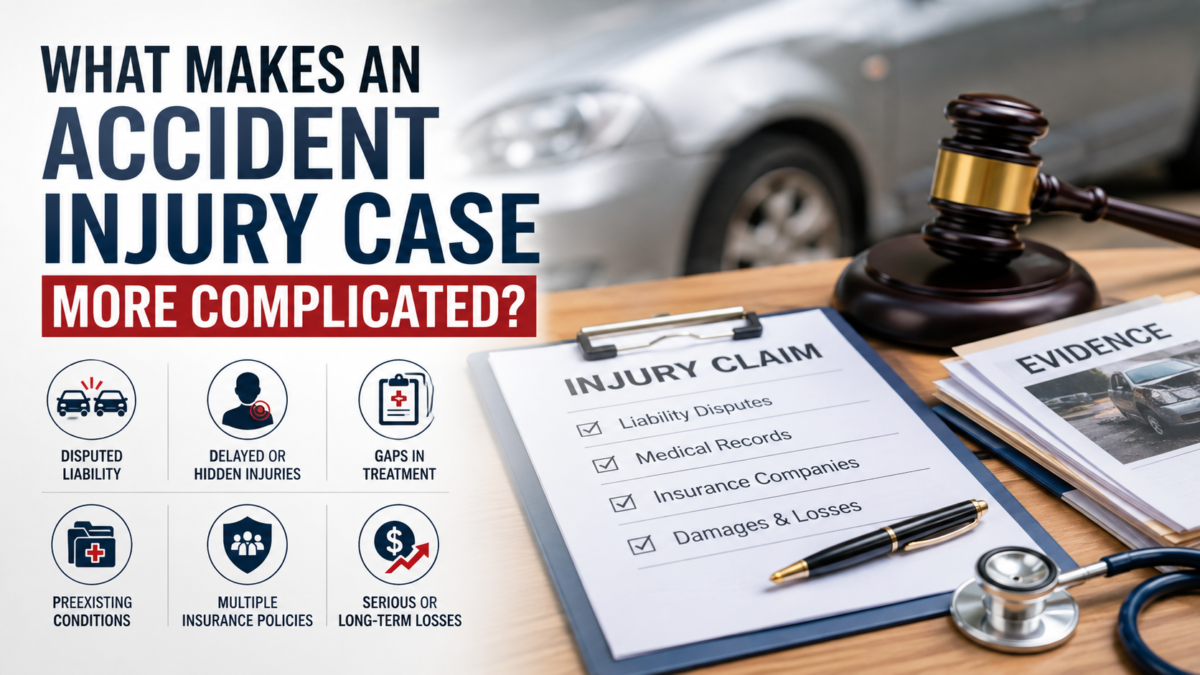
A case that first appears simple can grow more complicated because of disputed responsibility, delayed symptoms, multiple insurance companies, or gaps in medical treatment. Understanding these complications can help injured people avoid mistakes and make better decisions during the recovery and claims process.
Table of Contents
Disagreements About Who Was Responsible
Liability is often one of the biggest sources of conflict. The other driver, property owner, employer, or insurance company may argue that the injured person contributed to the accident.
In a car collision, for example, both drivers may give different accounts of what happened. Without dashcam footage, independent witnesses, photographs, or a detailed police report, establishing responsibility may require a closer investigation.
Cases can become even more complex when several people or businesses share responsibility.
Injuries That Do Not Appear Immediately
Not every accident injury is obvious at the scene. Adrenaline can temporarily mask pain, while conditions such as whiplash, soft tissue damage, or certain back injuries may become more noticeable hours or days later.
This can create problems if an insurer claims the injury was unrelated to the accident. Receiving a timely medical evaluation can help identify hidden injuries and create documentation connecting symptoms to the incident.
Accident victims in South Florida may choose to visit a provider such as iconmedicalcenters.com for an assessment, treatment plan, and ongoing medical records.
Gaps in Medical Treatment
Missing appointments or stopping treatment early can complicate an injury claim. An insurance company may argue that the injuries were not serious or that the injured person failed to follow medical advice.
Of course, there may be genuine reasons for a treatment gap, including transportation difficulties, work commitments, childcare responsibilities, or concerns about cost. Even so, it is important to communicate these problems with medical providers and legal representatives rather than simply disappearing from treatment.
Preexisting Medical Conditions
Previous injuries do not automatically prevent someone from pursuing compensation after an accident. However, they can make the case more difficult.
An insurer may attempt to blame current symptoms on an old injury, chronic condition, or earlier accident. Medical imaging, previous records, physician notes, and evidence showing a change in symptoms can help clarify how the recent accident affected the person’s health.
Multiple Insurance Policies
Cases involving commercial vehicles, rideshare drivers, delivery companies, or workplace accidents may involve several insurance policies. Determining which policy applies, how much coverage is available, and which company should pay can take time.
Uninsured or underinsured drivers can also add another layer of difficulty.
Serious or Long-Term Losses
The more severe the injury, the more carefully future losses must be calculated. A claim may need to account for ongoing medical care, reduced earning ability, rehabilitation, home assistance, and lasting pain.
Ultimately, accident injury cases become complicated when the facts, medical evidence, and financial consequences are open to disagreement. Careful documentation, consistent treatment, and professional guidance can make a confusing process much easier to manage.