

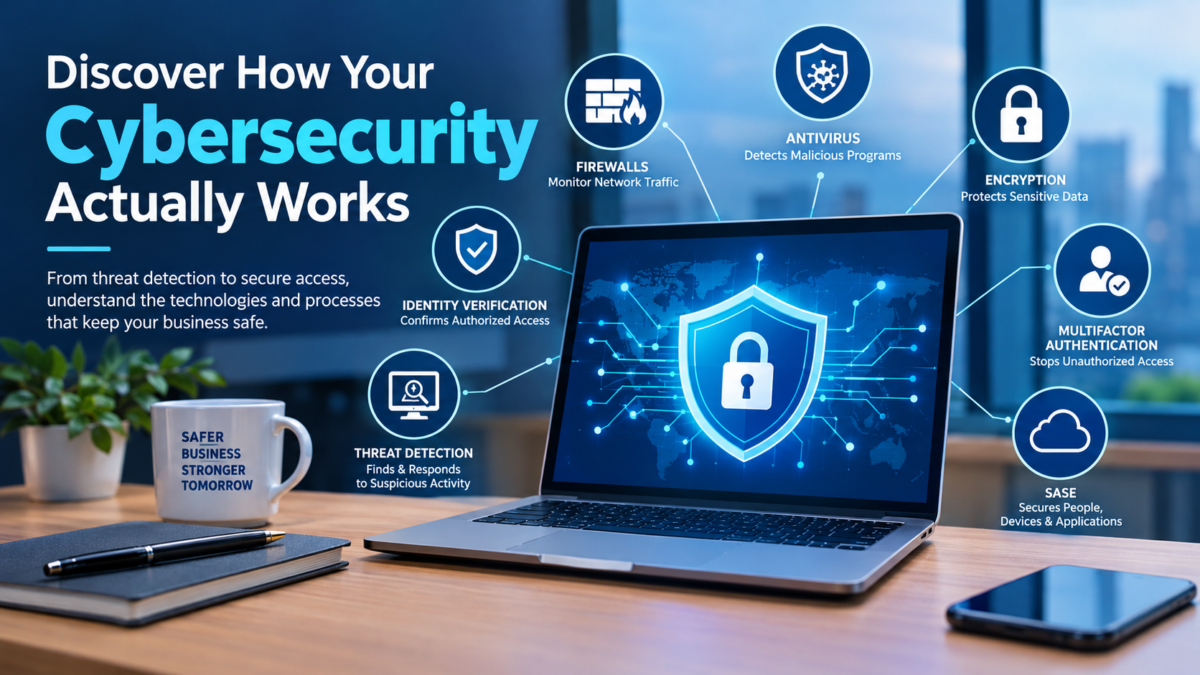

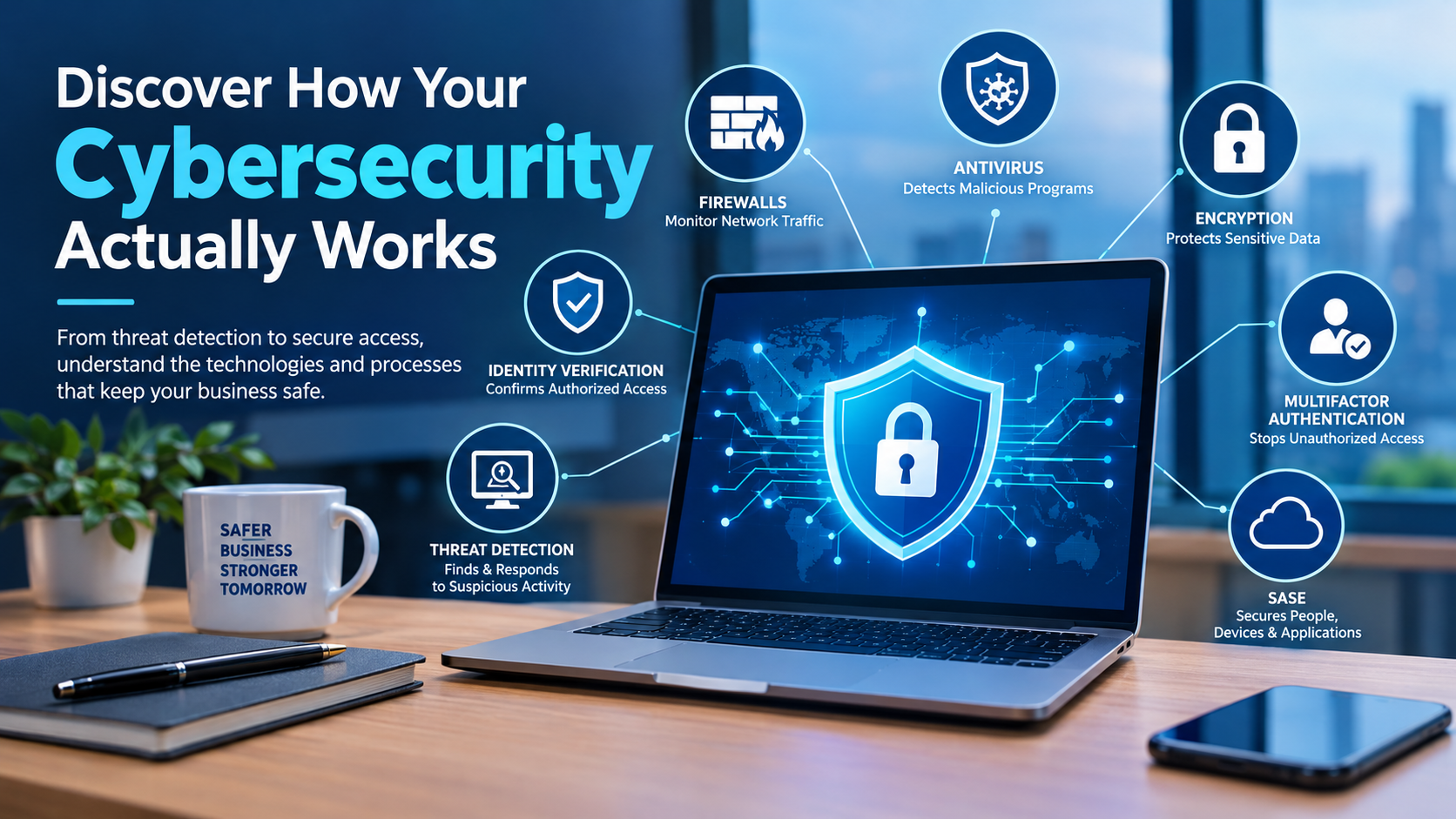
Cybersecurity is something most businesses recognize as important, but how many understand what happens behind the scenes? From protecting confidential information to preventing unauthorized access, cybersecurity involves several technologies and processes working together to keep digital systems secure.
Understanding these protective measures can help business owners make informed decisions about their security investments. Rather than relying entirely on technical specialists, knowing the fundamentals allows organizations to identify vulnerabilities and recognize why different security measures are necessary.
Table of Contents
How Cybersecurity Protects Your Business
Cybersecurity works by identifying potential threats, preventing unauthorized activity, and responding when suspicious behavior occurs. Different security technologies perform different functions. Firewalls monitor network traffic, antivirus software detects certain malicious programs, and encryption helps protect sensitive information from being intercepted or exposed. These technologies are most effective when combined with appropriate security policies and regular system maintenance.
For example, a firewall might prevent suspicious network connections, while multifactor authentication makes it harder for someone using stolen credentials to access an employee account. Together, these measures create multiple barriers that cybercriminals must overcome.
The Difference that Modern Network Security Brings
Traditional network security often focused on protecting systems within a company’s physical office. However, remote working, cloud applications, and mobile devices have changed how businesses access information. Modern solutions such as SASE cybersecurity combine network security capabilities with technologies designed to manage access to business applications.
Secure Access Service Edge (SASE) can help organizations establish security policies across different locations, protect network connections, and control access to sensitive resources. This approach can be particularly valuable for businesses whose employees regularly work remotely or access cloud-based platforms. Rather than relying exclusively on traditional network boundaries, organizations can apply security controls closer to users and applications.
Why Identity Verification Matters
One of the most important aspects of cybersecurity is confirming that people accessing business systems are authorized to do so. Passwords provide basic protection, but compromised credentials can allow attackers to impersonate legitimate employees.
Multifactor authentication strengthens security by requiring additional verification before granting access. Businesses can also implement role-based access controls, ensuring employees only receive permissions appropriate to their responsibilities. Regularly reviewing these permissions helps prevent unnecessary access to confidential information.
What Happens When a Threat Is Detected?
Cybersecurity systems can monitor activity for indicators of suspicious behavior, including unusual login attempts, malicious traffic, or unexpected changes to important files. Depending on the technologies deployed, automated security tools may block connections, generate alerts, or isolate affected devices. Security teams can then investigate incidents, determine whether information has been compromised, and take appropriate action. Having an incident response plan helps businesses respond efficiently while minimizing operational disruption.
Why Cybersecurity Requires Regular Attention
Cybersecurity isn’t something businesses can configure once and forget about. New vulnerabilities emerge, employees change roles, and organizations introduce additional software and devices. Regular updates, vulnerability assessments, employee training, and security reviews help maintain effective protection. Businesses should also maintain reliable backups and test recovery procedures to prepare for potential disruptions.
Understanding how cybersecurity works makes it easier to recognize weaknesses and evaluate protective measures. By combining appropriate technologies with responsible workplace practices, organizations can strengthen their defenses and create a safer digital environment for employees, customers, and business information.