


In today’s fast-paced business landscape, organisations are drowning in operational data yet starving for meaningful insights. Every system, sensor, and software generates streams of numbers, logs, and performance metrics. Raw data alone doesn’t deliver value; it’s the transformation of that data into clear, actionable business insights that empower better decisions, more efficient operations, and sustainable growth.
The challenge isn’t just collecting data. It’s understanding what the data means and applying it to real business problems. When done correctly, operational data becomes a strategic asset rather than an underutilised byproduct of daily processes.
Table of Contents
Understanding Operational Data
Operational data refers to the information generated through the daily activities of a business. This includes supply chain metrics, production volumes, equipment performance, customer interactions, sales transactions, and more. Unlike financial data, which is often backward-looking, operational data tends to be real-time or near real-time, offering a window into what’s happening in the business right now.
For example, a logistics company might collect data from vehicles, routes, and delivery times. By integrating that data with advanced analytics, the company gains insights into bottlenecks, fuel usage, and driver performance. Tools like telematics play a critical role in feeding high-quality operational data into analytics platforms, enabling businesses to monitor assets and performance in real time.
Turning Data Into Insights
The journey from data to insight involves several key steps:
- Data Collection and Integration
Effective insight begins with high-quality, consistent data. Businesses must ensure that data is collected from all relevant sources and that these sources communicate with each other. Integrating systems, from enterprise resource planning (ERP) to Internet of Things (IoT) sensors, prevents data silos and creates a unified picture of operations.
- Data Cleaning and Preparation
Raw data often contains errors, duplications, or missing values. Before analysis, data needs to be cleaned and standardised. This process might seem mundane, but it’s crucial: clean data leads to reliable insights, whereas dirty data can lead decision-makers astray.
- Advanced Analytics
Once data is prepared, analytics tools can be applied. This ranges from basic descriptive statistics to predictive modelling and machine learning. Analytics reveals patterns, trends, and anomalies that humans alone might miss.
- Visualisation and Interpretation
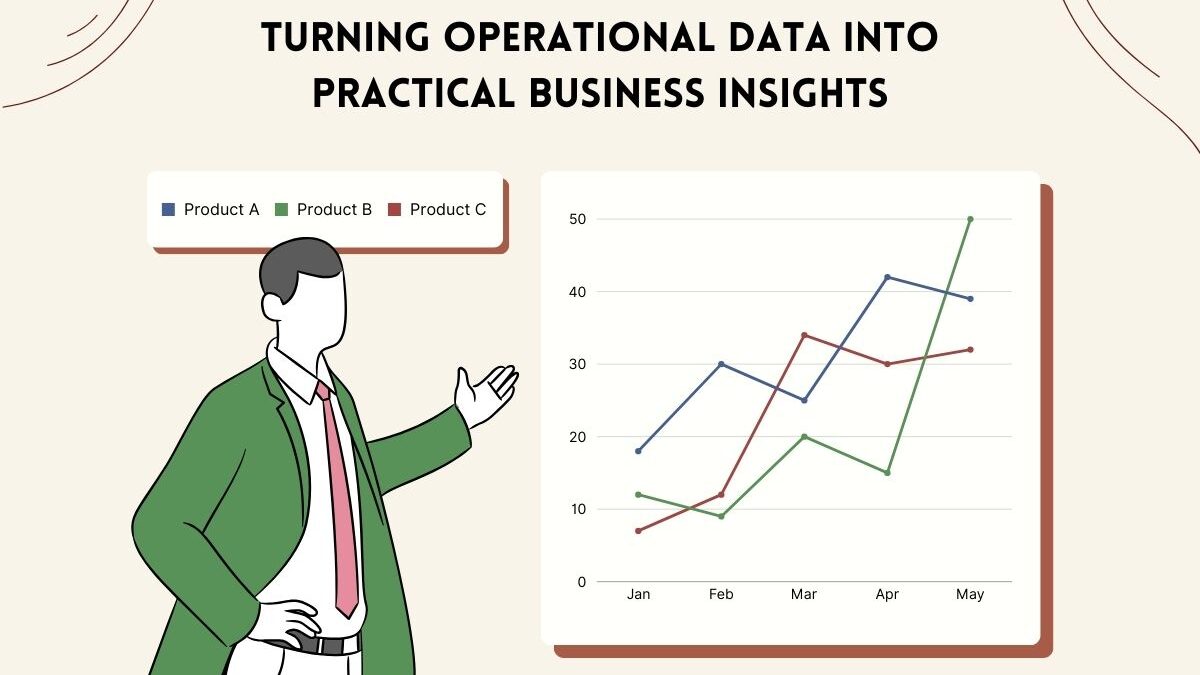
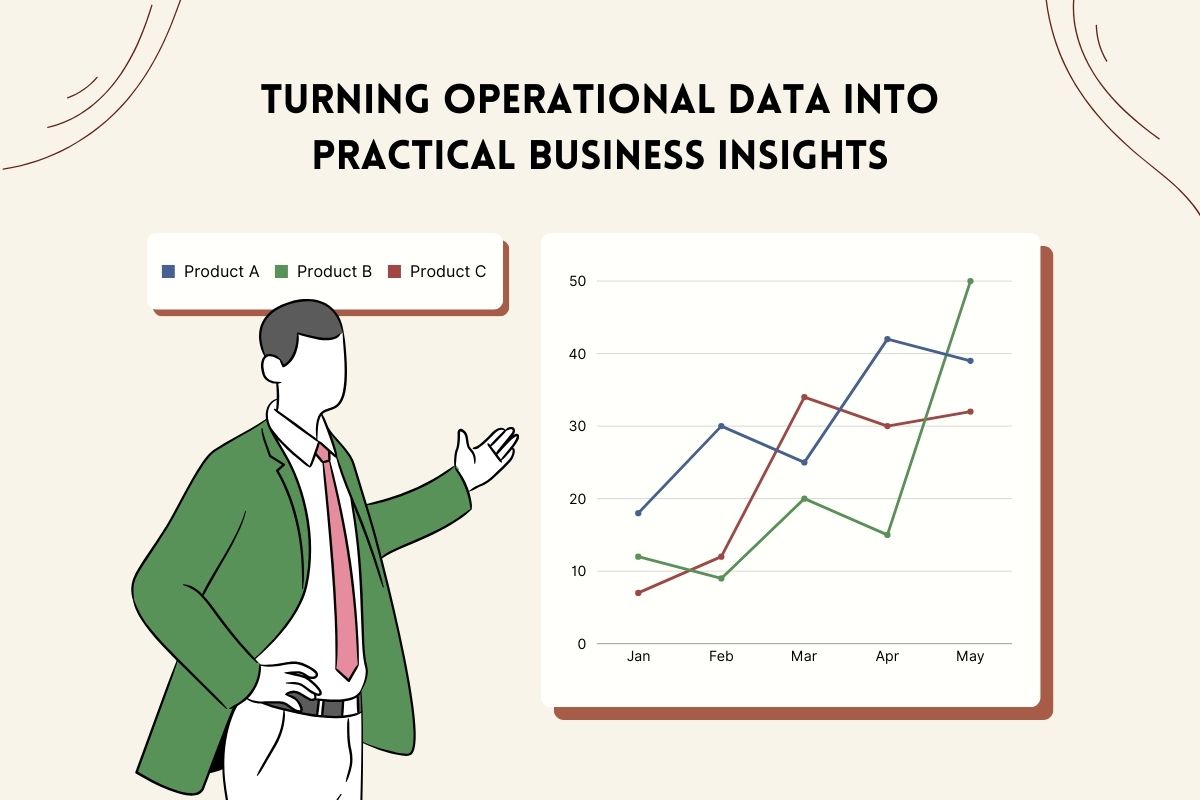
Numbers alone aren’t always intuitive. Dashboards, charts, and visual reports help translate complex data into formats that stakeholders can quickly understand. Visualisation bridges the gap between technical analysis and business decision-making.
Practical Applications in Business
Turning operational data into actionable insights has tangible benefits across industries:
- Manufacturing: Real-time monitoring of equipment can predict failures before they happen, reducing downtime and maintenance costs.
- Retail: Customer purchasing patterns help tailor inventory levels and promotions to real demand.
- Logistics: Data on delivery times and routes improves scheduling and reduces fuel expenses.
- Healthcare: Patient flow and resource utilisation data help optimise staffing and improve care delivery.
Making Insights Actionable
Insight alone isn’t enough; businesses must act on what they learn. This means establishing processes that tie insights to decisions. For example, if data reveals chronic delays in a supply chain, leadership needs a protocol for investigating root causes and implementing corrective measures.
It also requires a culture that values data-driven decision-making. When teams trust and understand the data, they are better equipped to champion change and innovation.
Conclusion
Operational data holds immense potential, but only if it’s transformed into practical business insights. By prioritising quality data collection, leveraging advanced analytics, and fostering a culture that values actionable intelligence, businesses can unlock new efficiencies, reduce risks, and stay ahead in competitive markets. Turning data into insights isn’t just a technical challenge; it’s a strategic imperative.