


If you landed here, chances are you’ve seen the name pop up somewhere — maybe in a search suggestion, a forum thread, or a marketing email — and you’re trying to figure out what SEO by Highsoftware99.com actually is. That’s a reasonable thing to want to know before handing over your website’s organic search health to anyone.
So let’s cut straight to it. No recycled marketing copy. No vague praise. Honestly, a fair, down-to-earth assessment of what this platform is actually capable of, what distinguishes it from traditional SEO services, where all the money-saving potential is, and what types of businesses are truly viable clients.
This isn’t a sponsored piece. It’s an attempt to answer the question most coverage of this topic either sidesteps or buries in filler.
Table of Contents
Quick Summary
- SEO by Highsoftware99.com is a branded SEO platform built around Google Autocomplete optimization (called ATC or “SEO Instant Appear”) paired with conventional on-page, technical, and content SEO.
- It’s not an officially recognized Google standard — it’s a commercial methodology. Whether it works depends entirely on which techniques are used under the hood.
- The ATC component carries real risk: Google’s SpamBrain can detect and penalize artificial search volume signals. Any service that claims to “force” Autocomplete appearances warrants scrutiny.
- The conventional SEO layer — technical audits, content optimization, E-E-A-T alignment — is legitimate and widely practiced. That part isn’t controversial.
- Verdict: assess it in the same manner you‘d assess any SEO services. Demand for transparency of methodology, discourage anyone promising top positions and make sure the branding won‘t replace thorough research.
What Exactly Is SEO by Highsoftware99.com?
Highsoftware99.com A search optimization tool that, according to search optimization tool history, has been in use since 2019. It positions itself as an ai powered Seo service for ranking websites on not only google search, but also inside the answer that appeared on Ai Chatbots like ChatGPT, Gemini, Google A.i Overviews.
The platform appears to operate across two separate domains. The main site at highsoftware99.com focuses primarily on what they call Google Autocomplete optimization — getting a brand or keyword to appear in Google’s search suggestions. A companion site at seo-by-highsoftware99.com positions itself more broadly as a full-service SEO operation built around Google’s E-E-A-T framework.
In plain terms: it’s a branded SEO methodology. Not a Google-endorsed standard, not a recognized industry certification, but a specific commercial approach to search optimization that combines a proprietary Autocomplete strategy with more conventional SEO techniques.
The Core Service Layers
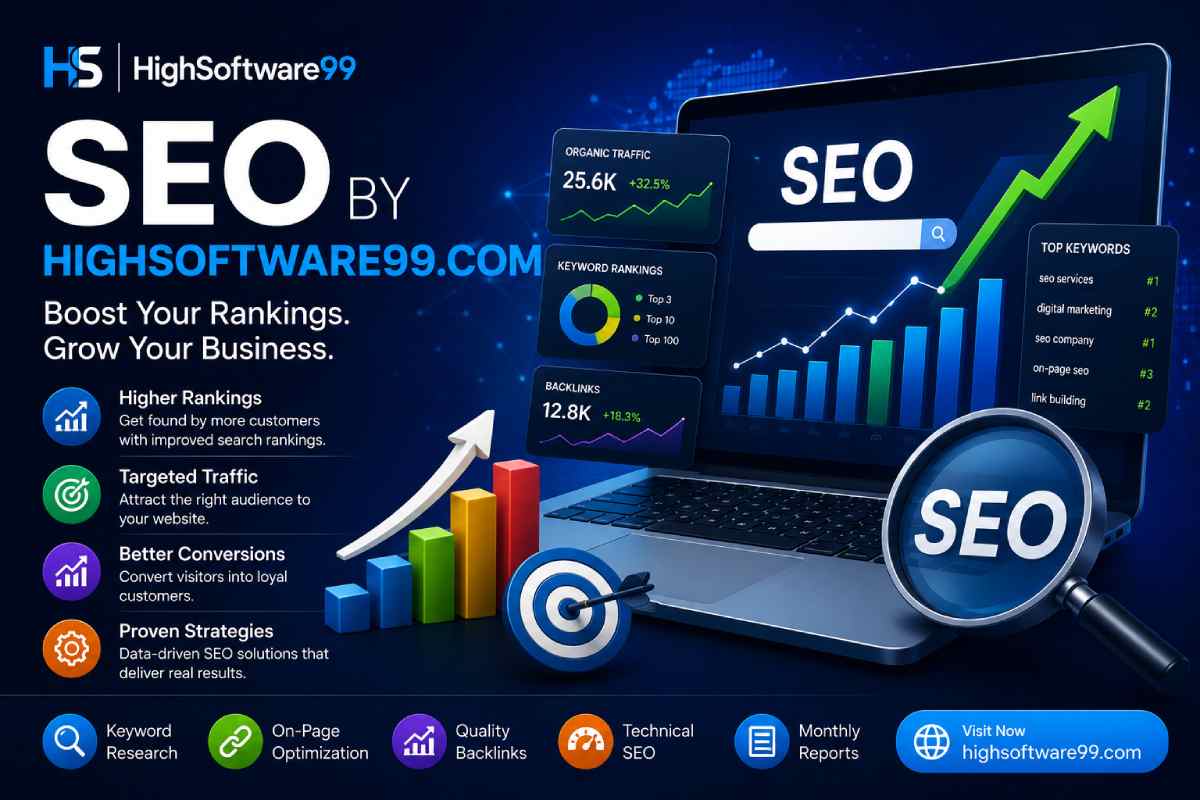
- Technical SEO: site audit, Core Web vitals, crawlability, mobile friendly, schema markup
- On-page optimization: keyword intent mapping, Title tags and Meta descriptions, Heading structure, Internal links
- Content strategy: E-E-A-T alignment, question-based content, topic cluster architecture
- Answer Engine Optimization (AEO): formatting content for Google’s featured snippets and People Also Ask
- Generative Engine Optimization (GEO): structuring content so AI systems like ChatGPT and Perplexity cite it
- ATC / SEO Instant Appear: the Autocomplete optimization component (discussed in detail below)
The ATC Strategy: The Part That Actually Needs Explaining
This is where things get interesting — and where the most important caveats live.
Google Autocomplete, the suggestions that appear as you type in the search bar, is populated based on a combination of overall search volume for related queries, trending terms, your personal search history, and your geographic location. Google’s own documentation states these predictions reflect actual searches people conduct. They’re not random and they’re not editable through a dashboard.
Highsoftware99.com’s ATC strategy — which they call “SEO Instant Appear” — claims to get a brand or keyword into those Autocomplete suggestions by generating enough consistent, patterned search activity that Google registers it as a relevant signal. The idea is that appearing in the search bar itself creates early brand awareness before a user even reaches organic results.
Here’s the problem with that. In 2026, Google’s SpamBrain system is specifically designed to detect artificial search volume signals. If Autocomplete appearances are being manufactured through coordinated or automated searches rather than genuine user behavior, Google can and does respond with manual penalties. Rankings don’t just dip — domains can be removed from search results entirely, and recovery can take months or longer.
That risk doesn’t mean every implementation of this approach is manipulative. It means you need to ask the right questions before assuming it isn’t.
ATC Strategy: Opportunity vs. Risk
| Factor | Upside | Risk |
| Google Autocomplete placement | Early brand visibility before click | Penalty if signals are artificial |
| Speed of results | Faster initial awareness than organic SEO | Short-term gains can reverse quickly |
| Transparency | Depends entirely on provider | Lack of methodology clarity is a red flag |
| Long-term durability | Strong if backed by genuine search interest | Collapses if based on manufactured volume |
The Conventional SEO Layer: Where the Legitimate Value Lives
Strip away the ATC angle and what you’re left with is a fairly standard modern SEO framework. Technical audits, content optimization, E-E-A-T alignment, AEO formatting — these are all things that established SEO agencies do, and they’re legitimate.
Between 2024 and 2025, Google launched 12 confirmed algorithm updates, leading E-E-A-T signals to have a greater impact on the websites that rank for difficult search queries. Just 47–54% of websites pass all Core Web Vitals thresholds. Sites that improve from “Poor” to “Good” status are reporting 25% conversion rate increases on average. The technical and content optimization work is real, and when done properly, it compounds over time.
Answer Engine Optimization is also genuinely worth paying attention to in 2026. The shift toward AI-generated search results is real. Gartner estimated that by 2026 as much as 25% of organic traffic could be driven to AI chatbots. Whether that number turns out to be accurate or not, the overall direction is obvious: If you‘re not creating content that is easily laid out and cited by AI systems, you‘re trailing in a rapidly increasing percentage of search.
GEO — Generative Engine Optimization — is newer and less standardized, but the underlying logic is sound. AI systems prioritize factual accuracy, clear entity definitions, and content that’s easy to extract key facts from. Structuring your content with that in mind is good practice regardless of what you call it.
Who Should Actually Consider This Service?
Not every SEO approach fits every situation. Based on what Highsoftware99.com documents about its methodology, here’s an honest read on where it makes most sense and where it probably doesn’t:
Scenarios Where It Could Work
- New websites with no organic footprint. Brand-new domains can’t rank competitively on organic results immediately — they lack the backlink history, content depth, and domain signals that established sites have built over years. Getting into Autocomplete suggestions early can create awareness before organic rankings kick in, provided it’s done through legitimate means.
- Businesses paying heavily for Google Ads with inconsistent returns. Paid search costs money every click, every day. A well-executed organic SEO strategy builds a traffic asset that compounds. If your Ads spend isn’t delivering reliable ROI, organic is worth the investment.
- Any brands that have searchers using ChatGPT, Bing or Perplexity to find answers before they buy. If the people you are targeting Google then ask ChatGPT, Perplexity etc and your sites ‘don‘t show up in the answers, then you have a visibility gap. The GEO layer addresses exactly that.
- Local businesses in moderately competitive markets. Local SEO remains relatively stable. Only 0.01% of local queries trigger AI Overviews, meaning traditional local search optimization — Google Business Profile, citation consistency, location-based content — is still highly effective.
Where You Should Pause
- If the ATC methodology isn’t clearly explained. Any service that can’t or won’t tell you precisely how it generates Autocomplete signals should be treated with caution. “Trust us, it works” is not a methodology.
- If you’re promised specific ranking positions. No legitimate SEO service can guarantee a “#1 rank”. Google’s own guidelines are explicit on this. Anyone who makes that promise either doesn’t understand how search ranking works or is telling you what you want to hear.
- If your site is already well-established. Mature sites with strong domain authority and existing organic traffic are unlikely to see meaningful marginal gains from ATC-style tactics. Conventional SEO optimization is probably a better use of budget.
What Real SEO Actually Requires in 2026
Whether you use Highsoftware99.com or anyone else, the fundamentals haven’t changed even as the tools and surfaces have expanded. Here’s what’s actually working right now:
| SEO Layer | What It Involves | Why It Matters in 2026 |
| Technical SEO | Core Web Vitals, crawlability, schema, mobile-first | 47-54% of sites still fail CWV thresholds; fixing them drives measurable conversion gains |
| Content Quality | First-hand expertise, direct answers, E-E-A-T signals | 97% of AI Overview citations come from pages already in top 20 organic results |
| On-Page Optimization | Intent-matched titles, meta, headings, internal links | Foundation of any ranking; still among the highest-ROI tasks in SEO |
| AEO (Answer Engine) | FAQ schema, direct answers, clear structure | Earns featured snippets and People Also Ask placements |
| GEO (Generative Engine) | Factual clarity, entity definitions, citable structure | Positions content for AI-generated answer citations in ChatGPT, Gemini, Perplexity |
| Link Building | Earned backlinks from relevant, authoritative sources | Still a core trust signal; manipulated links remain a primary penalty trigger |
One statistic to remember: to date, the latest SEO research tells us that only 3.45% of all pages get any organic traffic from Google. That number isn’t meant to discourage — it’s meant to clarify the stakes. If you’re not doing SEO systematically and ethically, the odds of your content being found organically are not in your favor.
Red Flags to Watch For With Any SEO Service (Not Just This One)
These apply universally. Run through this list before engaging with any agency or platform:
- Guaranteed #1 rankings. Impossible. If a service says this, walk away.
- Vague methodology. If they can’t explain in plain language what they’ll actually do to your site, that’s a problem.
- No reporting structure. Legitimate SEO work produces measurable data — rankings, impressions, clicks, Core Web Vitals scores. If there’s no plan for transparent reporting, there’s a reason.
- Secret algorithm manipulation. This is marketing language for “we do things Google doesn’t sanction.” The risk lands on your domain, not theirs.
- Pressure to decide fast. Good SEO is a medium-to-long game. Anyone creating urgency around a decision that will affect your domain for years is optimizing for their sale, not your search performance.
Myths vs. Facts About SEO by Highsoftware99.com
| What People Assume | What’s Actually True |
| It has Google’s endorsement or official recognition | No such endorsement exists. It’s a commercial methodology, not a recognized standard. |
| Appearing in Autocomplete is always safe | Only if the signal is genuine. Manufactured search volume can trigger SpamBrain penalties. |
| The ‘Instant Appear’ claim means instant top rankings | It refers to faster indexing visibility, not guaranteed ranking positions. The two are very different. |
| All SEO by Highsoftware99 techniques are controversial | The conventional SEO layer (technical, content, AEO, GEO) is standard practice and widely accepted. |
| Any SEO service can guarantee results | No legitimate service can. Rankings depend on competition, content quality, algorithm behavior, and dozens of other factors. |
Frequently Asked Questions
What is SEO by Highsoftware99.com?
It’s a branded SEO platform and methodology that combines Google Autocomplete optimization (called ATC or “SEO Instant Appear”) with conventional technical SEO, content optimization, and newer approaches like Answer Engine Optimization and Generative Engine Optimization. It’s a commercial service, not a Google-recognized standard.
Is SEO by Highsoftware99.com legitimate?
The usual SEO items technical audits, E-E-A-T content, on-page optimization are valid. The ATC/Autocomplete component carries meaningful risk if it relies on manufactured search signals. Evaluate the specific techniques being used, not just the branding. Google’s Search Essentials are a useful benchmark for what’s safe and what isn’t.
Can any SEO service guarantee #1 rankings?
No. This is one of the clearest red flags in the industry. Google applies hundreds of signals to its algorithm, most of which are not under any one service‘s control. Anyone offering you to rank for a particular term is either wrong or lying.
How long does SEO actually take to show results?
The results of technical SEO fixes are usually evident in 2–4 weeks. Keyword rankings will move in 2–4 months. Dedication for 6–12 months will bring sustained organic growth into highly competitive niches. There are no shortcuts that don’t carry corresponding risk.
What is Google Autocomplete optimization and why is it risky?
Google Autocomplete shows search suggestions based on real user behavior. Services that claim to get brands into those suggestions by generating artificial search volume are essentially trying to fake a signal Google uses to measure genuine interest. Google’s SpamBrain system is built to detect exactly that, and penalties can be severe.
What should I look for in a trustworthy SEO service?
Open methodology, achievable deadlines, clear reporting, no ranking guarantees and strategies in accordance with Google‘s official published guidelines. Request case studies with tangible results and be wary of any service that cannot tell you in detail what and how they will do.
Final Word
SEO by Highsoftware99.com is a real service with a real methodology — just not one that fits neatly into a clean verdict. The conventional SEO work it describes (technical audits, content optimization, AEO, GEO) is legitimate, increasingly important, and worth investing in for any business serious about organic search in 2026. That part isn’t in dispute.
The ATC component is where you need to apply more scrutiny. Not because Autocomplete optimization is inherently illegitimate — brand awareness through search suggestions is a real concept — but because the line between building genuine search interest and manufacturing artificial signals is one that Google’s systems are actively trained to find. If that line is crossed, the penalty isn’t the service provider’s problem. It’s yours.
The standard you should hold any SEO provider to — this one or any other — is simple: transparency about methods, realistic timelines, and alignment with Google’s published guidelines. If SEO by Highsoftware99.com can demonstrate all three for your specific situation, it may be worth a conversation. If not, the “white-hat, proven, long-term” category of SEO services is large enough that you have plenty of alternatives.
For a clear reference on what Google itself considers acceptable optimization practice, start with Google’s Search Essentials documentation. For independent analysis of 2026 SEO benchmarks, Whitehat SEO’s 2026 best practices guide is a solid resource. And if you want a practical breakdown of which tactics are actually moving the needle this year, Page One Power’s white-hat SEO tactics guide is worth your time.