


Last Updated: October 27, 2026
Author: Kip Lytel, CFA
Research Analyst: Loveth Abu
Markets don’t just test intelligence. They test temperament, patience, humility, and decision-making under pressure. Every era produces star investors who appear brilliant while conditions are favorable. When liquidity is abundant, asset prices are rising, and narratives are supportive, many strategies look intelligent. During these periods, mistakes are often hidden, weak risk management goes unnoticed, and luck is frequently mistaken for skill.
Then conditions change. Regimes shift, liquidity tightens, volatility returns, and familiar narratives begin to unravel. Interest rates may rise, capital becomes harder to access, correlations break down, and strategies that once worked reliably start to fail. What previously looked like genius is revealed to have been supported by a tailwind. As Warren Buffett clarifies, “only when the tide goes out do you discover who’s been naked” What looked like genius often turns out to be just a tailwind. But a small group kept winning anyway. These investors did not avoid losses altogether. Instead, they avoided losses large enough to permanently impair their capital or force them out of the game. Their edge was not perfection, but durability. Through inflation shocks, crashes, bubbles, currency crises, credit stress, and structural market change, these investors continued to perform. They didn’t share a strategy. They shared a decision-making framework that survives uncertainty.
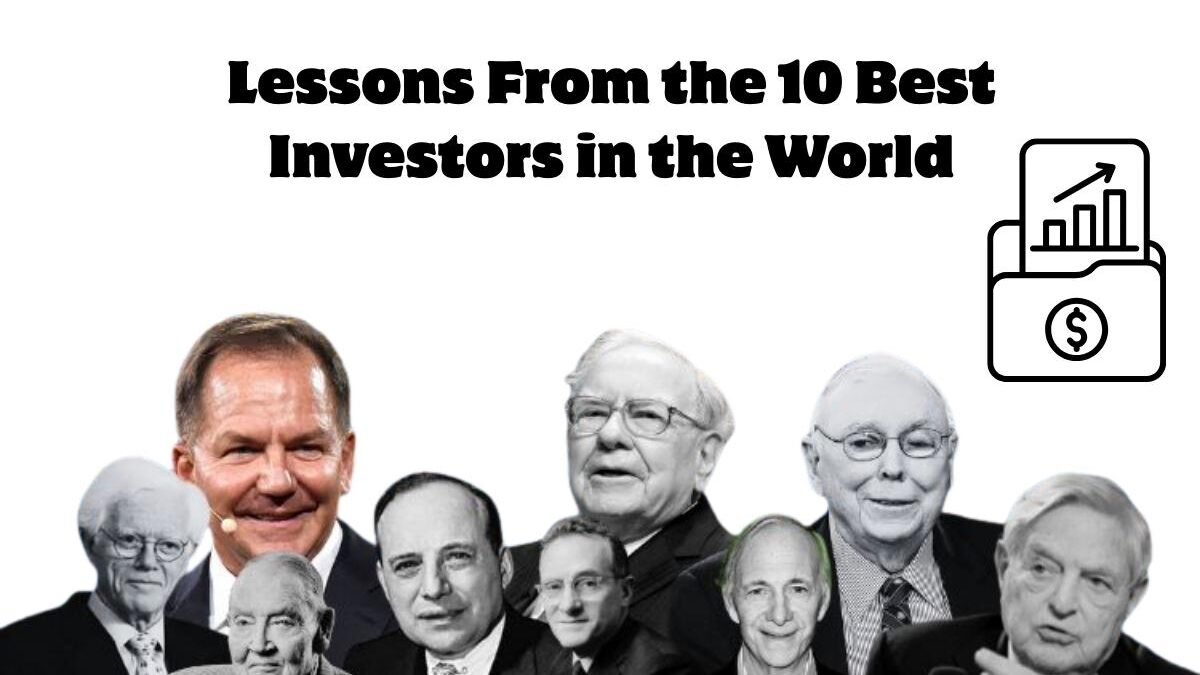
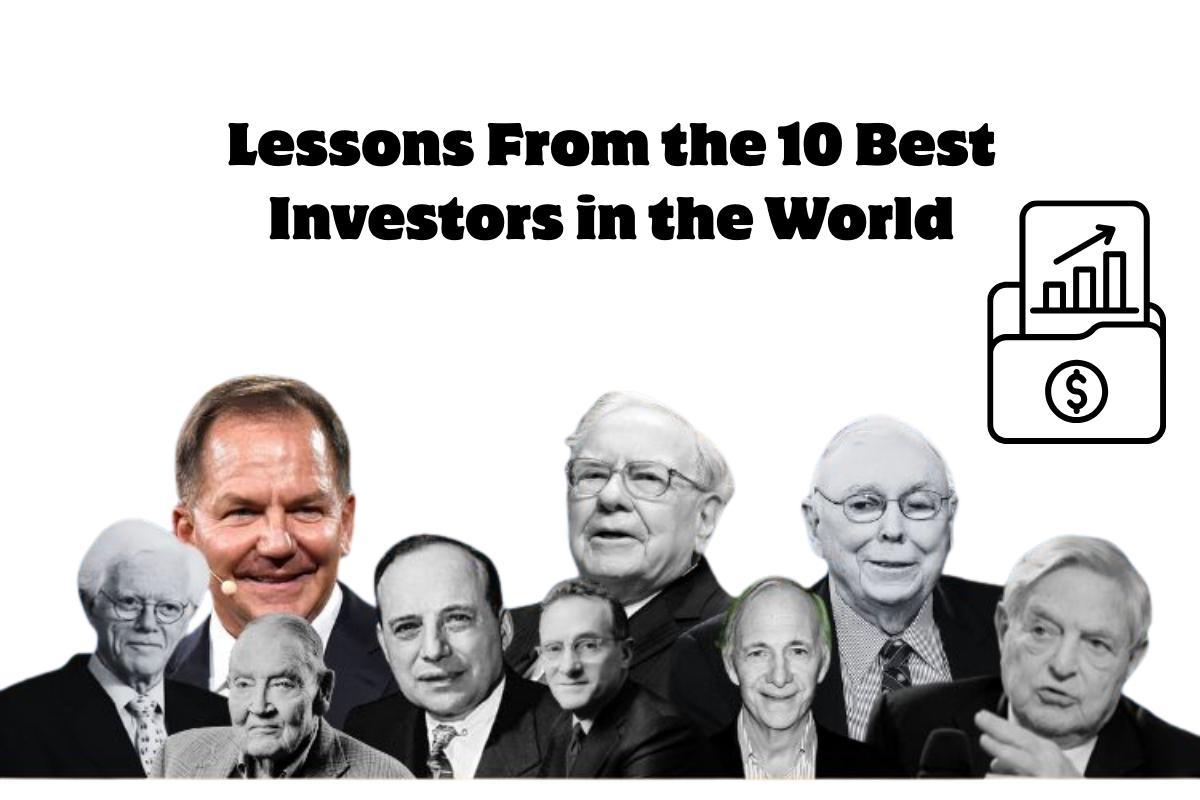
This article is about understanding how the world’s most successful investors think about risk, opportunity, patience, and capital allocation across changing environments. These lessons apply not only to professional investors, but to anyone making important decisions under uncertainty.
| Investor | Firm / Platform | Investment Approach Style |
| Warren Buffett | Berkshire Hathaway | Long-term value compounding in durable businesses |
| Paul Tudor Jones | Tudor Investment Corporation | Discretionary global macro with strict risk control |
| Ray Dalio | Bridgewater Associates | Systematic global macro / risk-parity frameworks |
| Jim Simons | Renaissance Technologies | Quantitative/statistical arbitrage |
| Peter Lynch | Fidelity Investments | Growth at a Reasonable Price (GARP) |
| Steve Cohen | Point72 Asset Management | Multi-manager fundamental + tactical trading |
| Ken Griffin | Citadel | Multi-strategy institutional platform investing |
| Bruce Kovner | Caxton Associates | Macro trend trading with patience |
| Stanley Druckenmiller | Duquesne Capital | Concentrated global macro |
| George Soros | Soros Fund Management / Quantum Fund | Reflexive macro investing |
| Julian Robertson | Tiger Management | Fundamental long/short equity |
Table of Contents
Lesson 1: Survival Is the First Skill
Warren Buffett’s famous rule — “Never lose money” — is often misunderstood. It is not literal. Losses are inevitable. Every investor experiences losses. What Buffett, along with investors like Paul Tudor Jones, truly emphasizes is avoiding permanent capital destruction. Temporary setbacks can be recovered from. Catastrophic losses cannot.
Paul Tudor Jones built his career around finding opportunities aggressively while cutting risk quickly when conditions changed. Similarly, Bruce Kovner believed discomfort often signals excess risk. Griffin and Cohen embedded risk oversight at the firm level because survival is structural, not emotional. Tony Robbins, after interviewing many of these legends, noted that virtually all of them are “obsessed with not losing money” and seek asymmetrical risk/reward — using the least risk for the maximum upside. Savvy insight: blowups don’t start with bad ideas; they start with position sizing that assumes you can’t be wrong.
Savvy insight: Blowups rarely start with bad ideas. They start with position sizing that assumes you cannot be wrong.
Lesson 2: Waiting Is a Competitive Advantage
In a world obsessed with constant action, these investors treat patience as a weapon.
Druckenmiller describes long stretches of patience punctuated by aggressive action. He famously said he likes “to be very patient and then when I see something, go a little bit crazy,” Buffett’s best deals often followed years of doing nothing. Jim Simons’ models required overwhelming statistical evidence before capital moved. George Soros waited for systems to break, not headlines to flash.
Kovner and Druckenmiller both emphasized sitting on their hands for months or years until the probability distribution became heavily skewed in their favor.
Savvy insight: In markets, restraint is not weakness. It is a rare and valuable edge.
From a planning perspective, Market Exposure Diversification can complement the discussion of Lessons From The Best Investors. It provides useful context for readers moving from basic understanding toward a practical business decision.
Lesson 3: Ego Is Expensive
Ego is expensive in markets. It has humbled investors once considered untouchable — Bill Ackman in Valeant, John Meriwether at LTCM, Neil Woodford in the U.K. The pattern is familiar: early success hardens into conviction, conviction drifts into certainty, and certainty resists disconfirming evidence. Complacency follows. Risk concentrates. Flexibility disappears.
Markets have no interest in reputation, intellect, or how strongly a view is held. They are indifferent to narrative and ruthless with attachment. Ego is routinely punished.
The most durable investors built systems specifically to defend against themselves.
George Soros focused on payoff asymmetry rather than the satisfaction of being right.
Ray Dalio institutionalized feedback loops designed to surface mistakes quickly and strip hierarchy from truth.
Jim Simons let models overrule story, even when the story was compelling.
At Point72, Steve Cohen built a culture where ideas are stress-tested, not defended.
Lesson 4: They Think in Systems
Great investors rarely look at price in isolation.
Elite investors know price is the last step in a long chain of cause and effect. What matters is the machinery underneath — the capital flows, incentives, balance-sheet pressures, competitive dynamics, and human reactions that interact to produce the quote on the screen.
Ray Dalio maps debt cycles, liquidity currents, and the plumbing of what he describes as the economic machine.
George Soros hunts for reflexive moments when belief changes behavior and behavior changes reality.
At Citadel, Ken Griffin, together with Steve Cohen, relies on adaptive information networks that force continuous updating rather than static conviction.
Julian Robertson focused on structural business resilience that could compound across cycles.
Warren Buffett and Peter Lynch concentrate on the underlying economic engine — the drivers of durable returns on capital — not the daily tape.
Savvy insight: price is an output; structure is the cause. Understand the system and volatility becomes data. Ignore the system and volatility becomes fear.
The wider picture also includes Right Mutual Fund For Your Investment Goals. Exploring that topic alongside Lessons From The Best Investors can make the article more useful for readers who are comparing alternatives or planning their next step.
Lesson 5: They Concentrate When It Matters
Elite investors diversify by default, but they do not dilute genuine advantage. When preparation meets a moment of unusual clarity, they scale exposure decisively.
Stanley Druckenmiller was known for pressing hardest when macro forces aligned, warning that excessive diversification can water down edge.
Warren Buffett has repeatedly allowed his best ideas to dominate capital — from American Express to Coca-Cola — when he believed competitive moats and return economics were both durable and understandable.
The classic case study, however, may be George Soros in 1992. Soros concluded the Bank of England could not maintain sterling’s peg within the European Exchange Rate Mechanism given the country’s growth and interest-rate realities. As pressure mounted, he increased the size of the short, ultimately building a position large enough to matter at a national scale. When the U.K. withdrew and the pound devalued on Black Wednesday, the trade reportedly generated roughly $1 billion in profit in a very short period.
It was not simply boldness. It was systems thinking meeting asymmetry — macro structure, policy constraint, and market positioning lining up at once.
Across many legendary records, lifetime results can often be traced to a small number of moments where insight, courage, and size converged. Savvy insight: diversification is a risk tool; concentration is a conviction tool. The art is knowing when the odds justify the weight.Top of Form
The wider picture also includes Market Profile Indicator. Exploring that topic alongside Lessons From The Best Investors can make the article more useful for readers who are comparing alternatives or planning their next step.
Lesson 6: Bottom of Form
Warren Buffett’s economic moats, Peter Lynch’s real-world growth winners, and Julian Robertson’s structural leaders share a common thread: dominant businesses reinforce their own advantages.
Pricing power, high returns on capital, and market leadership transform time into a tailwind. Scale lowers unit costs. Brand familiarity builds trust. Cash flow finances expansion. The competitive distance compounds almost invisibly.
Buffett’s long commitment to Coca-Cola is a classic illustration. Global distribution, habitual consumption, and strong margins allowed the company’s internal economics to do most of the heavy lifting. The outcome was driven by the flywheel inside the business, not by predicting the next macro headline.
Lynch offered a different, but equally powerful, field method. In One Up On Wall Street, he described observing Supercuts the way a customer would. He watched the steady line, counted how many chairs were full, noted the rapid turnover, and calculated how many haircuts per hour the store could produce. Simple math revealed strong store-level economics and a concept that could replicate. The insight did not come from a spreadsheet first — it came from understanding how the engine worked in the real world.
Savvy insight: great businesses compound even if markets stall. When dominance is authentic, patience becomes an advantage rather than a burden.
Lesson 7: Own the Machine
With the notable exception of Peter Lynch, many of the iconic investors did more than manage money — they owned the enterprise through which the money was managed.
George Soros built Soros Fund Management.
Ray Dalio founded Bridgewater Associates.
Ken Griffin created Citadel.
Steve Cohen built Point72.
By owning the platform, they controlled hiring, risk architecture, research priorities, capital allocation, and culture. They participated not only in investment performance but also in the economics of the management company itself — fees, growth in assets, brand equity, and enterprise value.
The firm became a second portfolio, often the most powerful one.
This structure creates alignment at a depth a salary never can. Decisions are made with permanent capital in mind. Reputation compounds. Talent attracts talent. Infrastructure improves outcomes. Over time, the operating engine surrounding the portfolio can become as valuable as the portfolio.
Many fortunes in asset management were built from this dual compounding: returns on investments and returns on ownership.
Lesson 8: Adapt Without Losing Your Core
None of the great investors stayed static. Longevity required evolution.
Warren Buffett migrated from buying statistically cheap “cigar butts” toward paying fair prices for exceptional businesses with durable moats.
Ray Dalio refined his models as different rate, growth, and liquidity regimes emerged.
Jim Simons demanded continuous signal improvement as markets arbitraged away old edges.
Ken Griffin and Steve Cohen relentlessly reinvested in technology, data, and talent density.
George Soros shifted frameworks as reflexive conditions changed.
Dalio summarized the philosophy succinctly: Pain + reflection = progress.
Two illustrations make the point.
Buffett’s early partnership years emphasized balance-sheet bargains — businesses trading below liquidation value. Over time, influenced by better businesses and better managers, he pivoted toward franchises such as Coca-Cola, where brand strength, distribution dominance, and pricing power could compound internally for decades. The toolkit changed; the discipline around margin of safety did not.
Stanley Druckenmiller provides a macro parallel. From currencies to equities to rates, he repeatedly adjusted frameworks as policy structures, capital mobility, and central-bank behavior evolved. What persisted was not a single model, but an insistence on aligning aggressively when probabilities skewed.
They changed tactics, instruments, and inputs. They did not change the principles of risk control, adaptability, and intellectual honesty that kept them in the game.
Lesson 9: Temperament Trumps IQ
While intelligence matters, temperament is the ultimate differentiator, it decides careers. Almost every one of these investors stresses emotional discipline over raw brainpower. Buffett calls temperament “the rarest and most valuable gift in investing.” Druckenmiller, Soros, and Dalio all highlight staying calm when others panic, avoiding FOMO-driven mistakes, and treating losses as tuition rather than failure.
Markets are psychological battlegrounds — the ability to remain rational amid chaos separates legends from the crowd.
Savvy insight: IQ gets you in the game; temperament keeps you playing for decades.
Lesson 10: You Don’t Get Paid Until You Take the Money
Unrealized gains can create comfort, confidence, and sometimes the illusion of control. But until risk is reduced or removed, those profits remain exposed to the market’s ability to take them back. With the notable exception of Warren Buffett, whose permanent capital base allows him to think like a multi-decade business owner, most elite investors treat the realization of gains as a continuous responsibility.
Ironically, the greatest asymmetrical winners often create a new problem: success breeds concentration. A position that began as prudent can swell into a dominant exposure simply because it worked. Left unattended, portfolio risk migrates from intentional to accidental.
Investors such as Stanley Druckenmiller, George Soros, and Paul Tudor Jones built reputations for bold conviction, yet they were equally known for systematically banking gains. They scaled out incrementally, reduced size into strength, or used hedges when upside began to mirror downside. The objective was not to capture every last dollar. The objective was to protect the compounding engine.
This behavior can appear unromantic. It lacks the drama of heroic holding periods. But it reflects a deep understanding of how quickly favorable math can deteriorate once a trade becomes crowded or narratives become universally accepted. When asymmetry compresses, prudence replaces patience.
Professionals therefore revisit a simple but powerful question: if this position were not already owned, would it be initiated at this weight today? When the answer becomes uncertain, exposure is trimmed, rebalanced, or defended. The decision is analytical, not emotional.
Most of these legendary investors are not married to their holdings. They are married to process, longevity, and the preservation of what prior decisions have already earned.
Final Takeaway
While the author is a professional investor with Montecito Capital Management, the discipline of investing is one where continuous learning from the very best matters. Investing is one of the few professions where learning from the very best never stops paying dividends.
Studying investors like Buffett, Soros, Druckenmiller, and others sharpens perspective on risk, opportunity, and capital allocation across cycles. In our own practice, that philosophy shows up in a willingness to be concentrated when conditions warrant — for example, maintaining meaningful, yet concentrated, exposure to gold and precious metals in recent years as macro pressures, currency debasement risks, and geopolitical instability reshaped the risk landscape.
The objective is not activity, but alignment: aligning capital with durable themes, asymmetric setups, and high-conviction opportunities while maintaining institutional-grade risk control. Investing is both craft and process, and learning from the best helps refine both.
Different strategies, same internal code: obsessive risk control, extreme patience, ego discipline, systems thinking, focus on business quality, pursuit of asymmetry, ownership of the platform, relentless adaptability, and — above all — iron temperament.
That architecture separates cycle winners from career builders. Master these principles and the market stops being a casino — it becomes a compounding machine.